
 English
 Español
 中文
中文
 Indonesia
 Italiano
 Português
Kuşadası to Pamukkale & Ephesus: Ultimate Two-Day Ancient Wonders Escape
03-05-2026

Kuşadası to Pamukkale & Ephesus: Ultimate Two-Day Ancient Wonders Escape
If you’re based in Kuşadası and want to squeeze Turkey’s most iconic ancient sites and natural wonders into just two days, pairing Ephesus with Pamukkale is the perfect escape. You’ll move from marble-paved Roman streets to shimmering white travertine pools and ancient spa cities, all without losing too much time on the road.
This itinerary is ideal if you’re staying in Kuşadası for a beach break or arriving by cruise ship and want to see more than just the harbor. Here’s how to turn two days into a concentrated dose of history, thermal waters, and Aegean culture.
Why Base Yourself in Kuşadası?
Kuşadası, in Turkey’s Aydın province, is more than a resort town. It’s a gateway. Within a three-hour radius you can reach Ephesus, Pamukkale, Aphrodisias, and several Biblical and classical sites, which is why it’s one of the main hubs for Tours from Kusadasi.
Staying here means you can explore intensely during the day and then unwind in the evenings with sea views, meze, and sunset walks along the promenade. For a two-day ancient wonders escape, Kuşadası offers the best combination of access and atmosphere.
Day 1: Walking Through Time in Ephesus
Morning: From Kuşadası to the Ancient City
Ephesus is only about 20–30 minutes from Kuşadası, so you can enjoy a leisurely breakfast before heading out. Aim to arrive when the site opens to beat both crowds and heat, especially in summer.
A guided experience makes a big difference here, as the city is layered with Greek, Roman, and early Christian history. If you’re coming from a cruise ship, an option like the Ephesus Shoreexcursion from Kusadasi Port can streamline logistics, including transport and timing with your ship’s schedule.
Inside Ephesus: Highlights You Shouldn’t Rush
Allow at least three hours inside the site. A straightforward walking route takes you from the upper gate to the lower gate, mostly downhill:
Upper Agora and Government Quarter: Start at the top to see the remains of official buildings and get a feel for the city’s scale. Your guide can help you imagine the political life that once animated these stones.
Celsus Library: This is the showstopper. The two-story façade is one of the finest re-creations of a Roman library anywhere. Look closely at the statues in the niches and the intricate carvings; each capital and column tells a different story of status and symbolism.
Great Theatre: Seating up to 25,000 people, this arena once echoed with oratory, plays, and later Christian preaching. Climb a few tiers up and look back towards the ancient harbor line to understand how Ephesus once sat on the sea.
Terrace Houses (extra ticket): This is where Ephesus gets personal. Glass walkways take you above mosaic floors, wall frescoes, and sophisticated heating systems that belonged to wealthy families. It’s one of the best-preserved glimpses of day-to-day Roman life in the eastern Mediterranean.
For travelers particularly interested in Biblical heritage, specialized itineraries such as the Biblical Ephesus Tour From Kusadasi Port with Lunch focus on the sites mentioned in the New Testament and early Christian tradition.
Afternoon: Sirince, Selçuk, or Beach Time
After the marble heat of Ephesus, you have a few paths:
Sirince Village: This former Greek hillside village is known for stone houses, cobbled lanes, and fruit wines. If you like combining history with a taste of local life, itineraries like the Ephesus and Sirince Village Tour from Kusadasi Port with lunch weave both into a single, relaxed day.
Selçuk Town: Stay closer to the ruins and visit the Ephesus Archaeological Museum, St. John’s Basilica, and the remains of the Temple of Artemis. This is ideal if you’re keen to deepen the Ephesus story rather than add another destination.
Return to Kuşadası: If you prefer a slow evening before a long day two, head back, stroll the marina, and enjoy a seafood dinner overlooking the Aegean.
Day 2: Pamukkale & Hierapolis – White Terraces and Ancient Spa Culture
Getting There: The Road to Pamukkale
From Kuşadası to Pamukkale, plan on roughly 3 hours by road each way. This is where a well-organized tour really helps; you’ll cover long distances but still have enough time to explore. Combined itineraries like the Pamukkale and Ephesus Tour from Izmir Airport or Kusadasi are designed to maximize time on-site rather than on logistics.
Leave early so you can arrive in Pamukkale late morning and avoid the peak midday rush on the travertines.
The Travertine Terraces: How to Enjoy Them Responsibly
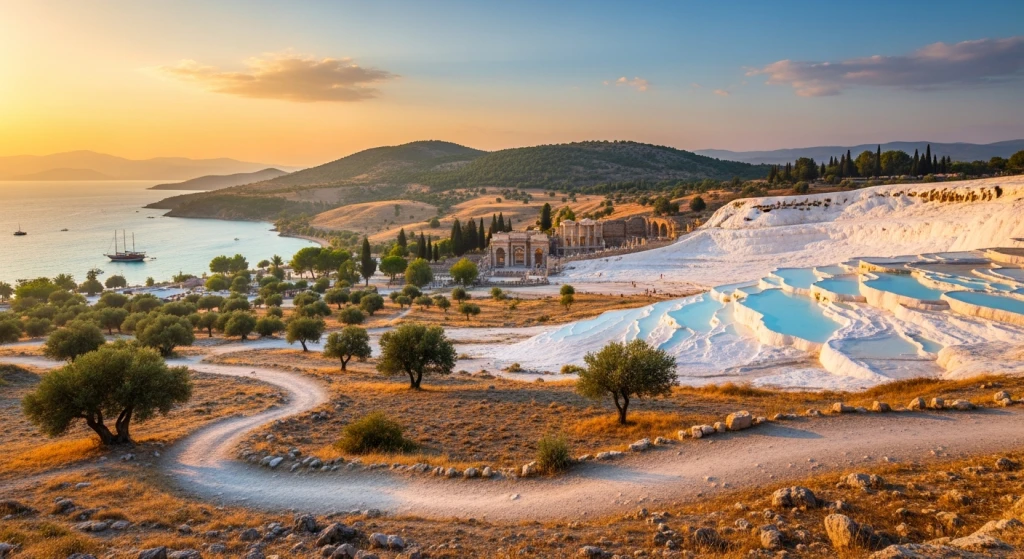
Pamukkale’s famous white cascades are formed by calcium-rich thermal waters flowing down the hillside, leaving natural stairs of stone-white pools. When you walk on them:
- You must remove your shoes to protect the soft limestone.
- Bring a small bag to carry your sandals and a lightweight towel.
- Pack a dark swimsuit or clothing; the white surfaces can make light fabrics almost transparent when wet.
Wade slowly through the warm pools, stopping at natural basins deep enough to sit in. The texture underfoot is slightly soft and sometimes uneven, so step carefully and enjoy the surreal view over the valley below.
Hierapolis: The Spa City in the Clouds
Above the terraces lie the atmospheric ruins of Hierapolis, an ancient Greco-Roman spa city built around thermal springs. Many visitors focus only on the pools and miss the larger archaeological site, which is a mistake if you’re drawn to ancient history.
Necropolis: One of the largest ancient cemeteries in Anatolia, with sarcophagi and tombs stretching along the road. It paints a vivid picture of a city that lived – and died – by its healing reputation.
Roman Theatre: A beautifully restored theatre with sweeping valley views. Sit on the steps, imagine performances against the backdrop of the plains, and notice how high up you’ve climbed from the white slopes below.
Antique Pool (Cleopatra’s Pool): Here you can swim among submerged marble columns, thought to have fallen during an earthquake. The water is warm, slightly fizzy with mineral bubbles, and there’s a separate fee – but if you enjoy unique swimming experiences, it’s worth it.
Cultural Texture: Beyond the Postcard
Both days of this escape reveal different sides of Turkish culture:
Everyday Aegean Life: In Kuşadası and the surrounding villages, look for tea gardens where locals linger for hours, bakeries turning out fresh simit (sesame bread rings), and weekly markets full of seasonal produce.
Living with Antiquity: In this region, ancient ruins are part of the landscape, not distant relics. Farmers plough fields near Roman walls; mosques stand beside Byzantine remains. It’s a daily coexistence with history that shapes how locals think about time and place.
Thermal Culture: At Pamukkale, you’re participating in a tradition that’s thousands of years old—traveling to thermal waters for healing, relaxation, and socializing. Today’s spas echo Roman bath culture more than you might expect.
Practical Tips for a Smooth Two-Day Escape
Best Time to Go: Late April–early June and September–October offer milder temperatures and fewer crowds. Summer is doable but hot; start early and drink plenty of water.
What to Pack: Comfortable walking shoes (for ruins, not travertines), sunhat, sunscreen, refillable water bottle, swimsuit, and a light layer for air-conditioned buses.
Travel Pace: With only two days, prioritize Ephesus and Pamukkale/Hierapolis. If you’re inspired to explore further afterwards, wider options like regional Ephesus Tours or multi-day Turkey itineraries can build on this first taste.
In just forty-eight hours, this Kuşadası-based escape lets you walk Roman streets, soak in thermal waters, and stand on white stone overlooking the Anatolian plain. It’s an intense but deeply rewarding way to experience the ancient heart of western Turkey without giving up the comforts of a coastal base.